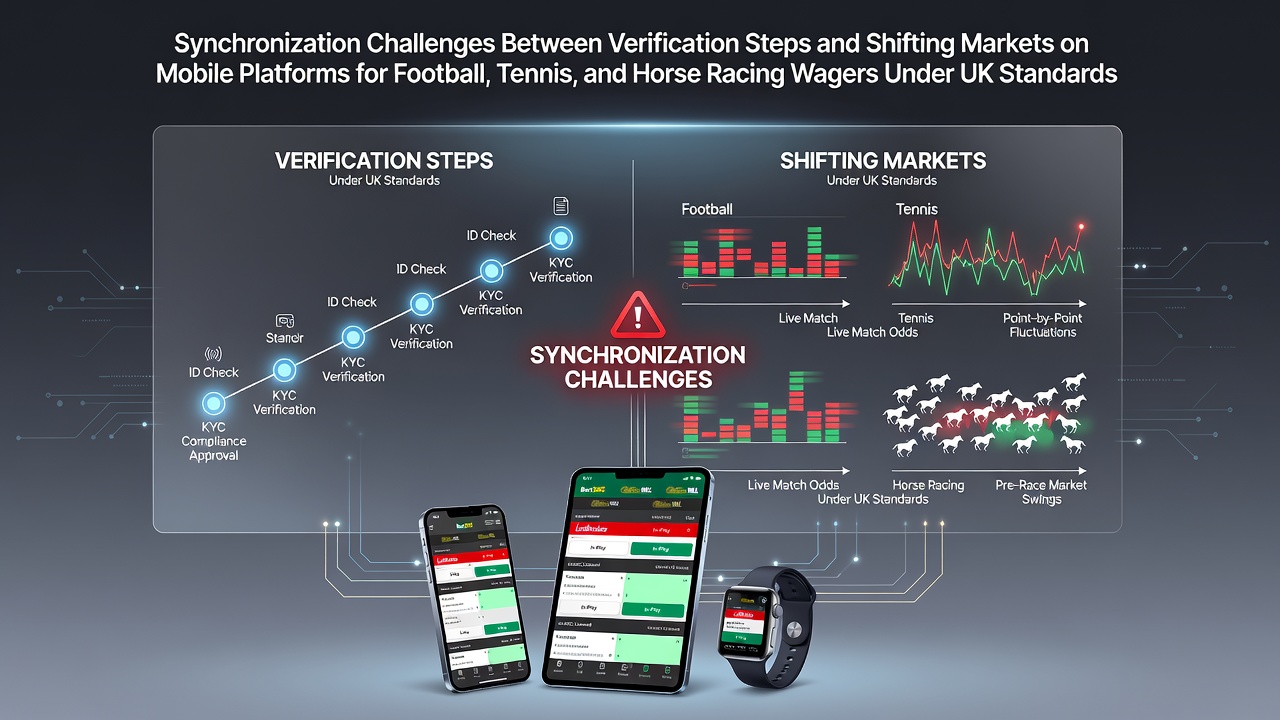
Synchronization Challenges Between Verification Steps and Shifting Markets on Mobile Platforms for Football, Tennis, and Horse Racing Wagers Under UK Standards
Verification processes on mobile platforms must align with rapidly changing betting markets in football, tennis, and horse racing, yet timing mismatches create operational friction under UK standards. Operators handle identity checks, address confirmations, and payment validations while odds adjust second by second during matches or races, and users expect seamless access on smartphones. Data from industry reports shows that delays in one step often cascade into missed opportunities in the other, particularly when markets move on live events.
Core Components of Verification in Mobile Wagering
UK standards require layered checks that include document uploads, biometric scans, and source-of-funds reviews, all completed through app interfaces designed for quick navigation. These steps run concurrently with market data feeds that update scores, player injuries, or track conditions in football, tennis, and horse racing. Researchers at academic institutions have documented how sequential verification flows can lag behind dynamic pricing engines, leaving accounts in partial states during peak activity periods. Observers note that integration between compliance modules and trading systems determines whether a wager processes before a market suspends or shifts.
Market Volatility Across Specified Sports
Football fixtures generate continuous odds revisions from goal scorers, red cards, and time elapsed, while tennis sets produce abrupt changes after breaks of serve or tiebreaks. Horse racing adds variables tied to post positions, weather, and late withdrawals that alter prices right up to the starting gate. Mobile platforms must synchronize these updates with verification gates that pause action until identity elements clear, and figures from multiple studies reveal higher abandonment rates when users encounter prompts mid-event. Those who track platform performance find that horse racing sessions, with their shorter windows, expose synchronization gaps more visibly than longer tennis matches or football halves.
Technical Integration Points and Timing Pressures
Application programming interfaces connect verification databases to odds servers, yet network latency on mobile networks introduces variability that static desktop systems rarely face. When a user initiates a football accumulator during half-time, address verification might still process while line movements occur, and similar patterns appear in tennis live betting or horse racing place markets. Evidence from platform analytics indicates that batch processing of checks, rather than real-time micro-verifications, amplifies the disconnect, especially during October 2026 when seasonal racing calendars overlap with international football tournaments and tennis tours. Operators adjust backend queues to prioritize high-velocity sports, but complete alignment remains an engineering target rather than a solved state.

Regulatory Expectations Shaping Platform Design
Standards emphasize consumer protection through timely checks without prescribing exact synchronization methods, leaving room for varied technical approaches across operators. A Canadian public health analysis of cross-border mobile systems highlights parallel issues where verification timing collides with live market access. Australian research from the Australian Institute of Health and Welfare similarly tracks how regional rules influence app architecture, showing that jurisdictions with strict timing mandates see fewer interruptions when verification runs in background threads. UK frameworks align with these observations by requiring audit trails that log both compliance events and market exposures, which in turn shapes how developers sequence the two processes.
Observed Patterns in User Sessions
Session data collected across multiple operators reveals clusters of verification prompts during high-volatility periods, such as the final furlong in horse racing or tiebreak stages in tennis. Football markets, with their extended duration, allow more buffer time for checks yet still experience friction when accumulators span several simultaneous games. People familiar with platform logs report that partial verifications completed between sets or innings reduce drop-off compared with full restarts, and October 2026 testing cycles have introduced refined token systems that carry verification status across market refreshes. These adjustments aim to keep the verification layer responsive without halting trading engines.
Conclusion
Synchronization between verification sequences and shifting markets on mobile platforms for football, tennis, and horse racing continues to evolve under UK standards through incremental technical refinements. Platform metrics and external analyses confirm that timing alignment influences completion rates across these sports, while regulatory requirements maintain focus on documented compliance without dictating specific integration architectures. Ongoing adjustments, including those scheduled around October 2026 calendar overlaps, address the core tension between security steps and real-time pricing demands.