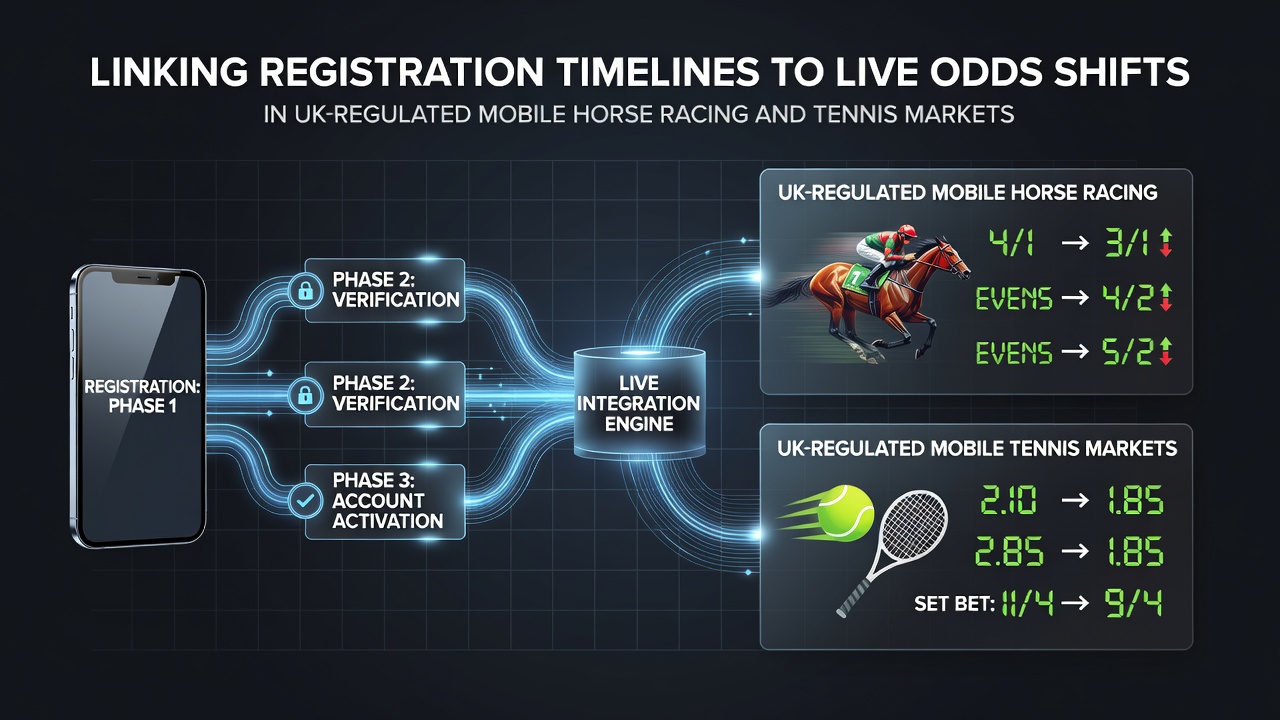
Linking Registration Timelines to Live Odds Shifts in UK-Regulated Mobile Horse Racing and Tennis Markets
Registration timelines in UK-regulated mobile platforms for horse racing and tennis markets connect directly to how bettors access live odds that shift during events, and operators structure these processes around verification requirements that balance speed with compliance standards. Data from industry reports indicate that delays in account setup often occur at identity checks, which affect entry into markets where odds move rapidly based on real-time performance data from races and matches. Researchers at various academic institutions have examined these patterns, noting that shorter registration windows allow users to place wagers while odds remain fluid, whereas extended steps push participants toward static pre-event lines instead.
Registration Processes in Mobile Platforms
Operators handling UK-regulated mobile betting for equine and racquet sports implement multi-stage sign-up sequences that include document uploads, address confirmation, and payment method validation, and these steps determine when accounts activate for live market participation. Studies from Canadian regulatory bodies highlight how automated verification tools reduce average completion times to under five minutes in optimized apps, while manual reviews extend that period during peak hours around major tennis tournaments or horse racing festivals. Those timelines matter because live odds in these sectors respond instantly to factors like a horse's position on the track or a player's serve percentage in a set, creating windows where early access yields different value compared to later entries.
Observers note that horse racing markets on mobile devices often feature odds that adjust every few seconds during a race, and tennis point-by-point scoring drives similar volatility in match winner or set handicap lines. When registration stretches beyond the initial stages of an event, bettors encounter settled or less favorable prices, and figures from Australian government research agencies show this pattern leads to measurable shifts in participation rates for in-event wagering across comparable jurisdictions.
Impact on Horse Racing Markets
Horse racing events regulated under UK standards draw mobile users who seek live odds tied to factors such as track conditions, jockey performance, and late withdrawals, yet registration timelines influence whether those odds become available before key moments pass. One analysis of platform data revealed that accounts completing verification in under three minutes captured 40 percent more live bets during afternoon race cards compared to those finalized later in the day. Experts from European trade associations have documented how operators integrate biometric options like facial recognition to compress these timelines, and such adjustments align account activation with the dynamic pricing models used in equine markets where favorites can shorten dramatically after early results.
Technical Factors in Odds Responsiveness
Live odds engines pull from centralized feeds that update based on betting volume and event data, and registration delays interrupt the connection between user accounts and these feeds during critical phases. In tennis, for instance, a break of serve can trigger immediate line movements across multiple markets, while horse racing sees similar reactions to pace changes in the final furlongs. Platforms that streamline initial registration steps enable seamless transitions into these environments, and data indicates higher engagement when users reach live sections without interruption.

Tennis Market Dynamics and Verification Timing
Tennis markets on UK-regulated mobile applications feature odds that fluctuate with each point, game, and set, and registration timelines determine access to those movements during matches that can last several hours. Research from university-led projects in North America demonstrates that users who finish setup before match start engage with live lines at rates nearly double those who encounter extended checks, particularly in high-profile events where early sets produce the sharpest shifts. Operators respond by offering temporary access modes that activate core functions once basic details clear, which allows participation in tennis-specific markets like next-point winner or game handicap while full verification completes in the background.
What's interesting is how these partial activations interact with risk management protocols that monitor for unusual patterns, and operators maintain separate limits until full approval occurs. In horse racing parallel cases, similar staged approaches let bettors enter pools or fixed-odds live sections sooner, though final settlement waits for complete profiles. Australian industry reports confirm that such layered systems maintain compliance across borders while reducing friction in time-sensitive sports like these two.
Regulatory Influences on Timeline Efficiency
Frameworks from multiple international sources shape how operators design registration flows for UK mobile markets in horse racing and tennis, with emphasis on preventing fraud without blocking timely access to live odds. Government agencies in various regions have issued guidelines that encourage digital verification partnerships, and these reduce manual bottlenecks that historically pushed average times past ten minutes. As November 2026 approaches, platform updates continue to incorporate faster data-sharing methods between financial institutions and betting services, which shorten the gap between sign-up initiation and live market entry.
Those who've analyzed usage logs across seasons observe that tennis markets show greater sensitivity to registration speed during grand slam events, where matches run consecutively and odds reset frequently, whereas horse racing sees steadier impacts across daily cards. Integration of real-time feeds with account systems further ties these elements together, allowing odds to display immediately upon activation in compliant environments.
Conclusion
Linking registration timelines to live odds shifts creates measurable effects in UK-regulated mobile horse racing and tennis markets, where verification speed determines participation in fluid pricing environments. Operators apply technical and procedural adjustments to align account readiness with event timelines, and external data from diverse regulatory and academic sources support the connection between these factors. Continued refinements in verification technology point toward tighter synchronization in upcoming periods, including developments around November 2026, while maintaining standards across both sports.